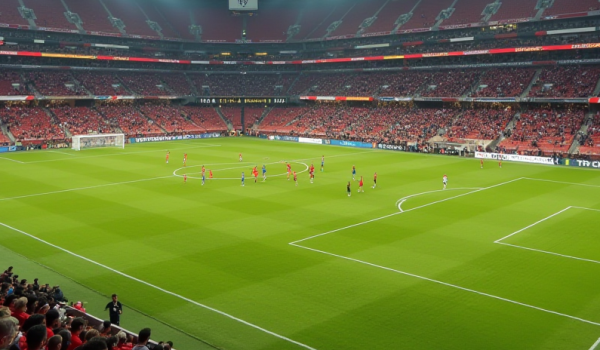

For many years, soccer in the United States existed outside the center of mainstream American sports culture.
That reality is changing rapidly.
Today, a new generation of American sports fans is growing up in a completely globalized sports environment where football is no longer distant or difficult to access.
With streaming platforms, social media, YouTube creators, and international sports coverage expanding every year, fans across the United States now follow clubs, players, and leagues from around the world daily.
And the shift is becoming impossible to ignore.
Unlike previous generations, younger audiences no longer depend only on local television broadcasts to discover sports.
A fan in Philadelphia can now wake up watching:
- Premier League highlights,
- Copa Libertadores clips,
- Brazilian football analysis,
- MLS coverage,
- Champions League matches,
- and transfer market news from Europe — all before lunchtime.
That constant global access has fundamentally changed how sports audiences behave.
Football culture itself also appeals strongly to modern digital audiences.
The sport delivers:
- nonstop storylines,
- emotional rivalries,
- international stars,
- massive fan cultures,
- dramatic atmospheres,
- and year-round global conversation.
Social media helped accelerate that connection.
Clips featuring:
- passionate crowds,
- stadium choreography,
- dramatic goals,
- player reactions,
- and historic rivalries
often perform extremely well among younger audiences looking for emotional sports experiences.
Many American fans are now discovering football not only through matches, but through football culture itself.
The upcoming 2026 FIFA World Cup could accelerate this transformation even further.
As the United States prepares to host one of the biggest sporting events in the world, millions of casual viewers may become exposed to international football culture at a level never seen before in North America.
That includes exposure to:
- South American football passion,
- European club rivalries,
- international supporter traditions,
- and global fan communities.
Cities like Philadelphia are especially well positioned for this evolution.
The region already combines:
- passionate sports culture,
- international communities,
- younger digital audiences,
- and growing interest in global football.
As soccer continues expanding in the United States, local sports media and independent football creators may play an increasingly important role in connecting global football culture with American audiences.
And perhaps most importantly, modern sports fans no longer feel limited by geography.
Supporting an international football club today feels normal to younger audiences who consume sports globally through phones, streaming services, gaming, and social platforms.
The result is a completely new generation of fans that views football not as a foreign sport — but as part of a connected global culture.
And by the time the 2026 World Cup arrives, that transformation may already be well underway.
About the Author