
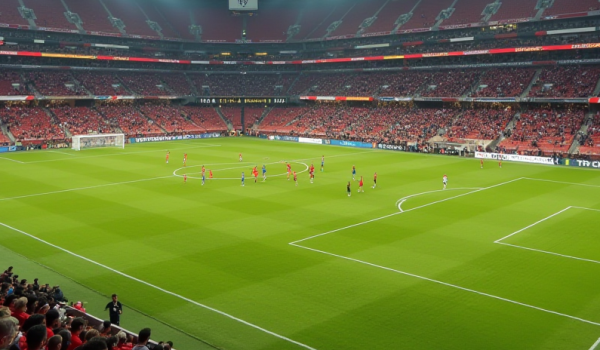
For many American sports fans discovering global football ahead of the 2026 World Cup, one name keeps appearing more frequently:
Clube de Regatas do Flamengo.
But what exactly makes Flamengo so important in world football culture?
To understand Flamengo, it helps to understand what football means in Brazil.
Unlike many sports organizations around the world, Brazilian clubs are often deeply connected to identity, family tradition, and community culture. Supporting a club in Brazil is not simply entertainment — for millions of fans, it becomes part of daily life.
And few clubs represent that emotional connection more powerfully than Flamengo.
Based in Rio de Janeiro, Flamengo has developed one of the largest fan bases in global sports. The club’s supporters are spread across every region of Brazil and increasingly across international communities as well.
On matchdays, the atmosphere surrounding Flamengo games often feels closer to a festival than a sporting event.
Massive crowds, nonstop chants, giant flags, fireworks, and emotional intensity create an experience many American sports fans may never have seen before.
But Flamengo’s global relevance goes beyond fan culture.
The club has built a reputation for:
- producing elite talent,
- competing internationally,
- developing attacking football,
- and maintaining enormous visibility throughout South America.
Over the years, Flamengo has become home to players who later gained international recognition in Europe and global tournaments.
The club also carries significant historical weight in South American football.
Winning major competitions such as:
- the Copa Libertadores,
- domestic league titles,
- and international tournaments,
helped establish Flamengo as one of the continent’s most recognizable football institutions.
For American audiences, Flamengo may also become easier to connect with because of the growing relationship between Brazil and the United States in football culture.
As MLS expands, international tournaments arrive in North America, and younger fans consume more global sports content online, clubs like Flamengo are becoming increasingly visible to English-speaking audiences.
Another important factor is style.
Many American sports fans are drawn to:
- emotional rivalries,
- passionate crowds,
- dramatic moments,
- and superstar players.
Brazilian football culture delivers all of that — often at an extremely high emotional level.
And Flamengo usually sits at the center of those moments.
For newer fans trying to understand global football beyond Europe’s biggest leagues, Flamengo offers a gateway into one of the richest football cultures in the world.
Because supporting Flamengo is not simply about watching matches.
It is about experiencing one of football’s most passionate global communities.
About the Author